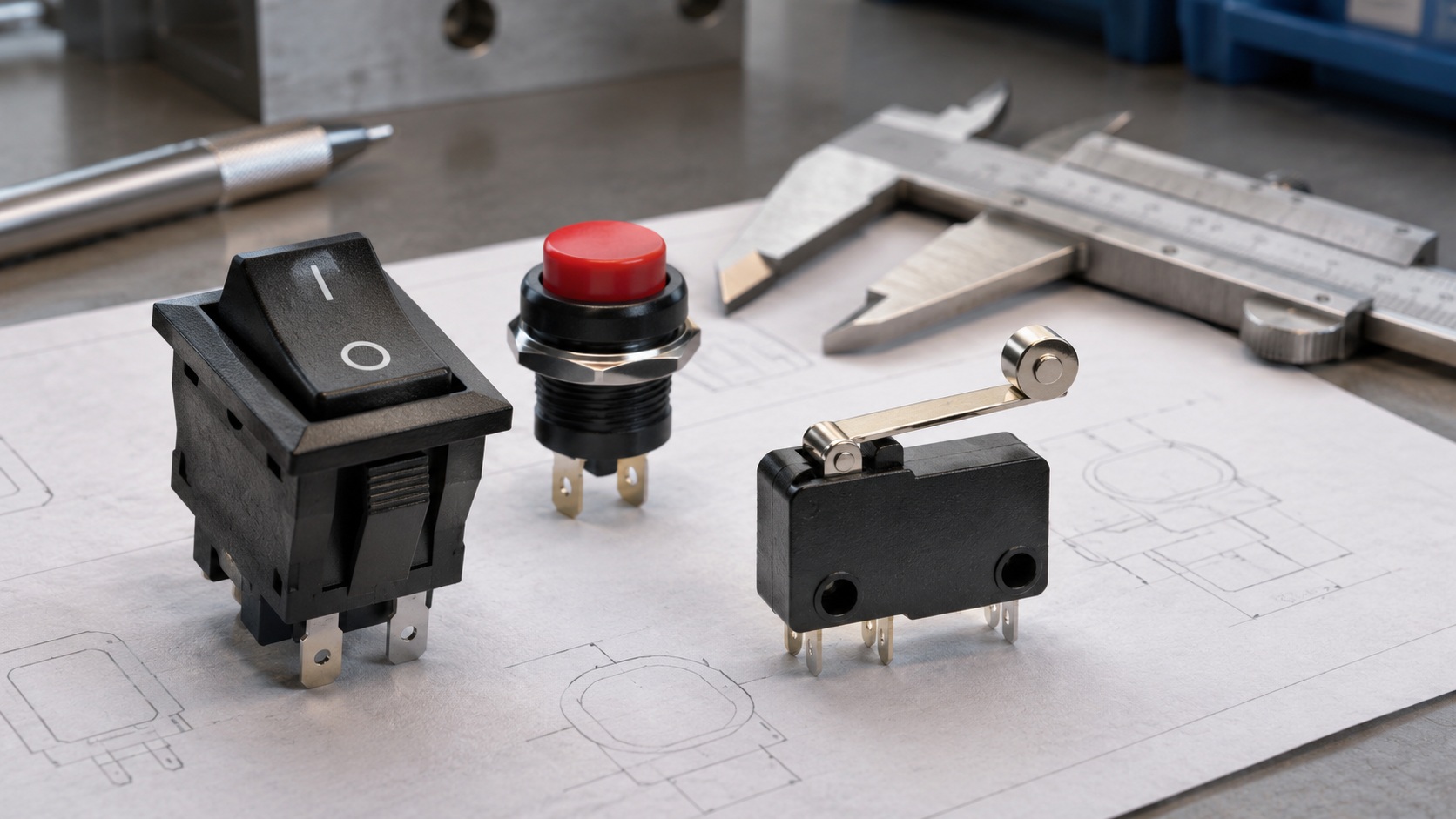
Two switches may fit the same panel cut-out and behave differently within a machine. Their…
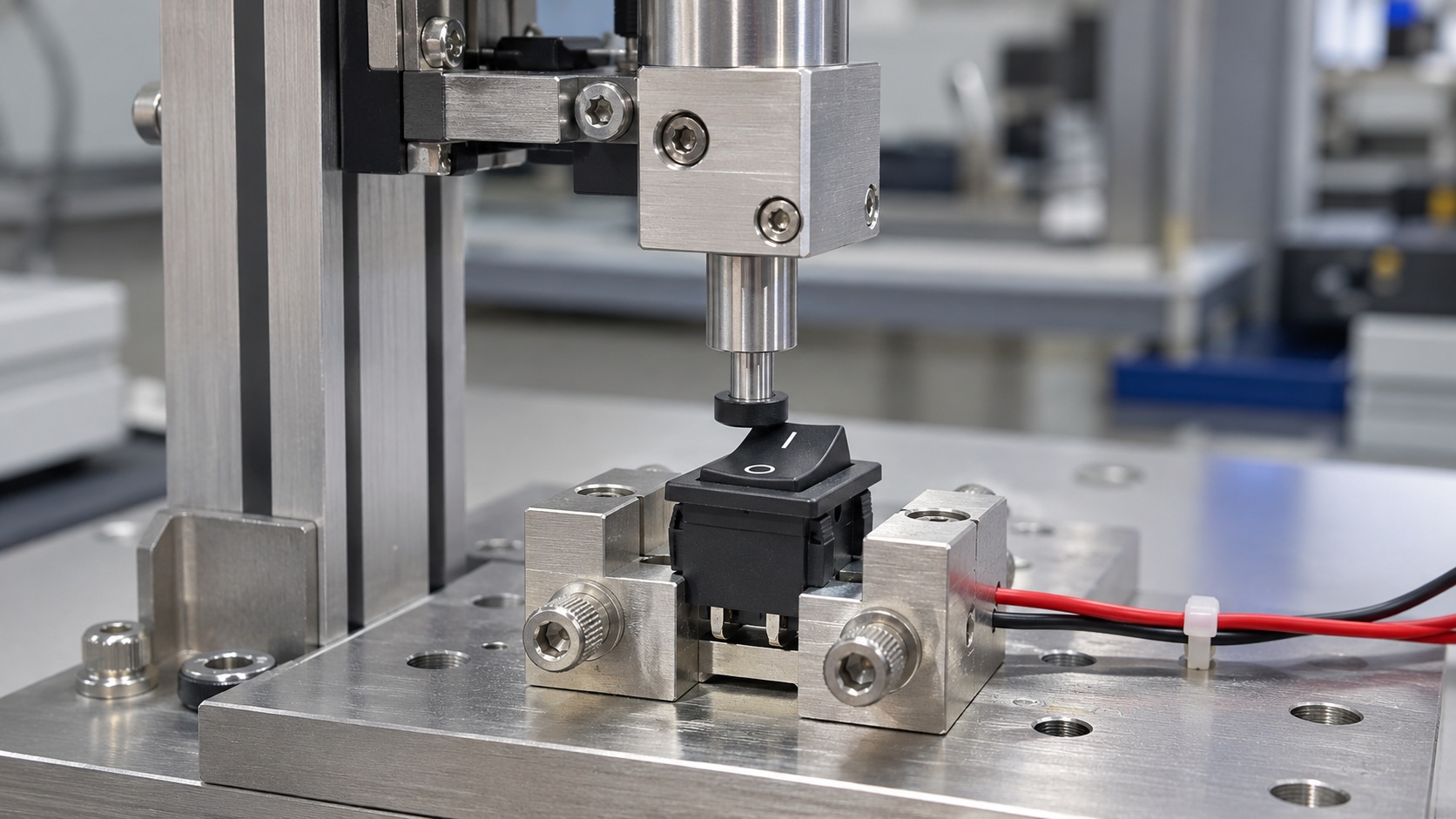
Switch service life mechanical and electrical cycles are not the same
A datasheet states one figure for mechanical durability and another for electrical durability. Treating them as two ways of expressing the same thing can overestimate a switch's service life in your equipment. Each figure relates to different conditions and answers a different question about operation.
Mechanical durability is assessed through actuation without switching an electrical load at the contacts. Electrical durability includes a defined load and test conditions. To assess reliability in an industrial application, read both figures in context and establish how they relate to the intended service.
What mechanical durability describes
Actuation moves elements of the mechanism. Mechanical tests assess their behaviour at a specified frequency, travel and other defined conditions. The result does not guarantee that the switch will perform the same number of operations with any load connected.
This information helps characterise the component, particularly when the system operates it frequently. However, it does not by itself explain what happens at the contacts when they open or close a circuit. It must also be considered alongside the mounting and operating conditions specified by the manufacturer.
What changes when contacts switch a load
Electrical durability is linked to operation under particular electrical conditions. When comparing parts, check voltage, current, load type and operating frequency. A high cycle count under one load does not establish the same behaviour under another.
Load type forms part of the figure
A motor, lamp and signal input do not place identical demands on contacts. Switching transients can matter. Alternating and direct current are not interchangeable when interpreting switching capacity. The cycle figure must be read with the condition to which it applies.
OMRON technical documentation distinguishes the two concepts and notes the influence of actual operating conditions. This reference supports understanding of industry terminology; the performance of an M2B component must come from its own datasheet. Figures and limits from another brand must not be transferred to the selected part.
Factors that can change performance
Load is only one part of the assessment. Frequency, speed and travel of actuation also matter, as does the environment. If the equipment mechanism presses the switch outside the intended conditions, comparison with the catalogue test becomes less representative.
Temperature, particles and moisture exposure must be checked against declared limits. A protection rating describes one aspect of the component, but it does not independently establish electrical durability or address every reliability factor. Each requirement must be reviewed within its own scope.
Why dividing cycles by daily usage is insufficient
Dividing a catalogue cycle figure by daily operations produces an arithmetic estimate, not a predicted failure date. The calculation leaves out variation in load, environment, idle periods and operating method. The criterion used to determine the end of the test must also be understood.
A simple comparison
Imagine two machines operating the same model a similar number of times. One switches a signal; the other acts on a load with demanding starting conditions. Although the operation counts are similar, the electrical conditions differ. A shared mechanical durability figure does not establish equal service life.
Maintenance planning should draw on the application, manufacturer documentation and, where appropriate, testing of the complete assembly. Where failure could have critical consequences, the assessment belongs within design and verification, with competent professionals and defined safety requirements.
Questions to ask when reviewing a datasheet
Before approving a part, request the conditions associated with mechanical and electrical cycle figures. Confirm the variant covered, the load used and the operating limits to respect. If the application differs from the test, describe those differences so their significance can be assessed.
Also agree what constitutes acceptable performance in the equipment: operation, contact characteristics or other project-defined criteria. Asking for more cycles is insufficient without specifying what must be maintained during service. A precise specification supports a consistent comparison between options.
Keep the conditions and the selected revision together in the project record. This makes it easier to revisit the decision when a circuit or mechanism changes. It also prevents a durability value being copied into a purchasing specification without the conditions that made it meaningful in the first place.
Validate the application before increasing purchasing volume
A sample enables integration and behaviour to be checked under representative conditions. The technical team should define the test and document mounting, load and actuation. An informal test without records may reveal a problem but offers little basis for comparing design changes.
If a motor, power supply or operating mechanism changes, review whether the earlier validation remains applicable. An unchanged external appearance does not establish that the new assembly retains the original conditions. Changes should be assessed before the previous approval is reused for another configuration.
Sample testing also needs a clear link to the equipment configuration being assessed. Record which part was used, the relevant setup and the outcome. This information helps the team distinguish a component question from a change elsewhere in the system, without turning one successful test into a universal claim about every installation.
Frequently asked questions
Can switch cycles be converted into years of use?
Not directly. Operating frequency helps, but load, environment and test conditions limit that estimate.
Does a high IP rating mean longer electrical life?
No. Protection against dust or water ingress does not express the electrical durability of the contacts.
Should service life be reviewed when the load changes?
Yes. A different load or switching conditions require a fresh check of the selected part’s suitability.
Discuss reliability in the context of your project
Contact M2B Technologies with the part number, load and intended use. Requesting durability documentation and explaining differences from test conditions helps guide selection. Reliability is assessed by connecting technical data to the equipment that will use the component, rather than treating published cycles as a universal promise.
Related Posts