Indicator lights play an essential role in visual communication within modern industrial environments. Their proper…
Indicator Lights: Function, Types, and Applications in Electrical Systems
An indicator light is an essential device for the operation of electrical and industrial control systems. It provides a clear visual signal about the status of a circuit, piece of equipment, or process. Machinery manufacturers and maintenance personnel incorporate these devices as essential elements of any advanced and modern electrical system.
Indicator Light: What It Is and How It Is Used
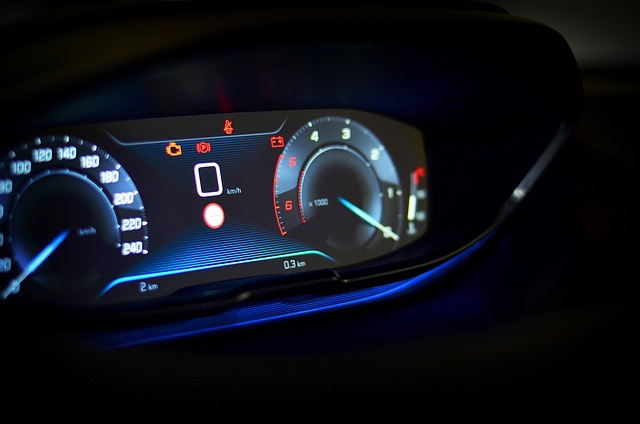
An indicator light is a light or visual signal installed on accessible surfaces of a control panel or switchboard to display a specific operating status. This component is typically located on control panels, switchboards, electrical distribution panels, or directly on equipment that requires constant visual monitoring.
One of the main functions of indicator lights is to provide instant information about:
- Circuit power.
- Active status.
- Error status.
- Standby conditions.
Installation is done by front mounting on the panel or by using a plug-in device in pre-designed slots. The electrical connection is made in parallel with the circuit to be monitored, so the light illuminates when the circuit meets the programmed condition for signaling.
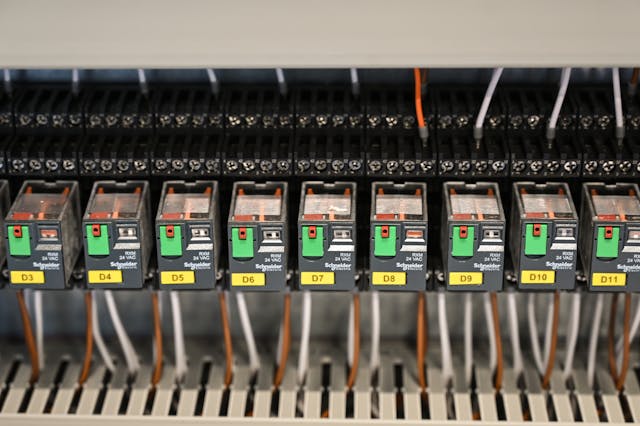
It is essential to highlight that, in complex electrical systems, the use of indicator lights allows for quick visualization of the presence of voltage, the status of relays, or the activation of alarms without needing to physically access the inside of the electrical cabinet, improving operational efficiency and reducing intervention times.
Common Types of Indicator Lights and Applications
Indicator lights are available in various technologies and formats, each geared towards a specific set of functions:
- LEDs. These are the most widely used today due to their energy efficiency, long lifespan, and high visibility. They are used in industrial control panels, automation systems, electrical panels, and continuous production machinery where permanent, low-power signaling is required.
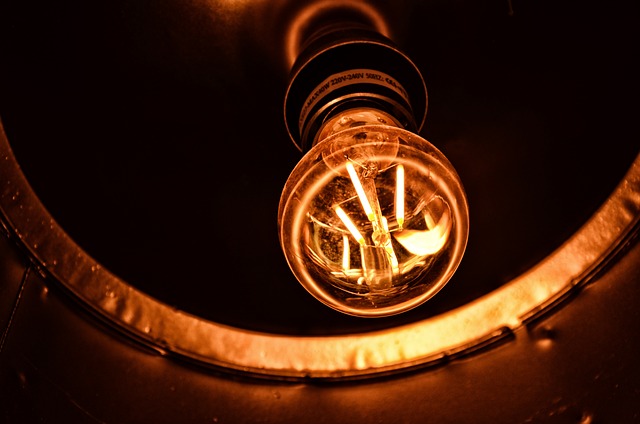
- Incandescent and Neon. These were the most common in the past. However, incandescent and neon indicators are still found in classic equipment or applications where visibility requirements are specific. They generate a warm light and are suitable for panels with limited space, while neon lights are useful in higher voltage circuits.
- Flashing and strobe indicators. These types of indicators provide flashing or blinking light signals to alert to alarm conditions or situations requiring immediate attention. They are frequently used in industrial safety environments and heavy machinery, where a steady light might go unnoticed.
In short, indicator lights are essential components in modern electrical systems, as they provide clear visual signaling of equipment status. Understanding what an indicator light is and how it is used allows you to select the appropriate technology (LED, incandescent, or strobe) and apply each type to the correct installation.
For industrial projects requiring reliable and efficient indicators, M2B Technologies offers indicator light solutions designed with high standards of quality and durability. We invite you to explore our available products and follow us on social media. You can also contact us if you need purchasing advice.
Related Posts